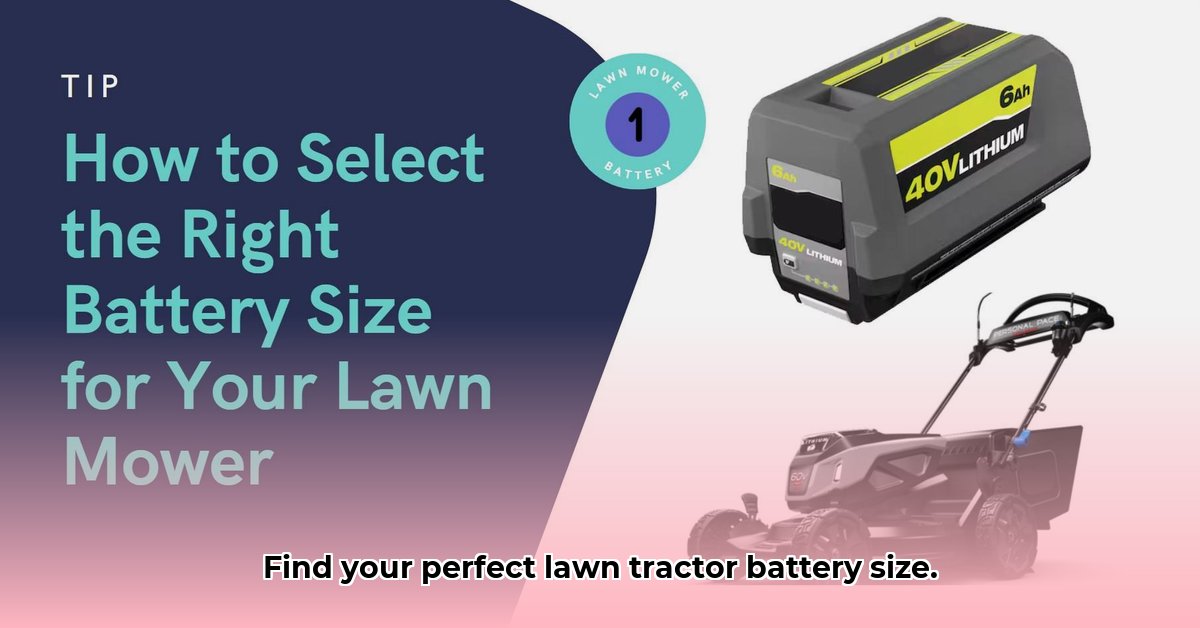
Finding the right battery for your lawn tractor shouldn't be a complicated task. This guide simplifies the process, ensuring you choose the perfect power source to keep your machine running smoothly. We'll cover everything from understanding battery specifications to safe installation, empowering you to tackle this project with confidence. For more in-depth information, check out this helpful resource on 12-volt tractor batteries.
Decoding Battery Group Size: The Key to a Perfect Fit
The most critical factor when selecting a replacement battery is its size. The Battery Council International (BCI) group size designates the battery's precise dimensions (length, width, and height). This is crucial; a battery that's too large won't fit, and one that's too small might not function correctly. You'll find the BCI group size printed on your existing battery or in your lawn tractor's owner's manual. Common sizes include Group 24, 27, 31, and 35, but your specific model may require a different size.
Understanding Battery Terminals and Connections
Beyond the overall dimensions (BCI group size), the battery terminals are equally important. Most lawn tractors utilize standard top-post terminals, but some may have side terminals. Check your old battery or your mower's manual to determine the correct type. Mismatched terminals can make connection difficult and even damage your lawn tractor's electrical system.
Cold Cranking Amps (CCA): Powering Through Cold Starts
Cold Cranking Amps (CCA) measure a battery's ability to deliver power for starting an engine in freezing temperatures. A higher CCA rating indicates a more powerful starting capability, particularly beneficial in cold weather. Your owner's manual will specify the recommended CCA rating. While a slightly higher CCA than recommended is acceptable, purchasing a significantly higher CCA battery may be unnecessary and more costly. A battery with insufficient CCA may struggle to start your engine, especially in cold conditions.
Battery Chemistry: AGM vs. Flooded Lead-Acid
Lawn tractors commonly use either Absorbent Glass Mat (AGM) or flooded lead-acid batteries. AGM batteries, while more expensive, offer several advantages: superior vibration resistance (ideal for uneven terrain), leakproof design, and extended lifespan. Flooded lead-acid batteries are more affordable but are prone to leaks, have shorter lifespans, and are more sensitive to vibration. The best choice depends on your budget and the frequency of your lawn tractor's use.
| Battery Type | Advantages | Disadvantages | Best For |
|---|---|---|---|
| AGM | Vibration-resistant, leak-proof, longer life | Higher initial cost | Frequent use, rough terrain |
| Flooded Lead-Acid | Lower cost | Prone to leaks, shorter lifespan, sensitive to vibration | Occasional use, less demanding tasks |
Choosing and Installing Your New Battery: A Step-by-Step Guide
Replacing your lawn tractor battery is relatively simple, but safety is paramount. Always prioritize caution.
Step 1: Consult Your Owner's Manual: Your owner's manual provides crucial information about the correct battery size, CCA rating, and terminal type for your specific model.
Step 2: Note Specifications (If Replacing): If replacing an existing battery, meticulously record its BCI group size, CCA rating, and terminal type. This ensures you select a compatible replacement.
Step 3: Select the Right Replacement: Use the information gathered in steps 1 and 2 to locate a suitable replacement battery. Ensure that all specifications precisely match.
Step 4: Safe Installation: Wear safety glasses and gloves. Battery acid is extremely corrosive. Carefully follow the instructions included with both the new battery and your lawn tractor's manual. Pay special attention to secure battery terminal connections.
Step 5: Verify Connections: After installation, double-check all connections for tightness and security. Loose connections can cause issues and potentially damage your electrical system.
Long-Term Considerations and Future Technologies
While this guide reflects current best practices, the field of battery technology is constantly evolving. Stay informed about potential advancements that might offer improved performance, longevity, and environmental impact.
Remember, selecting the appropriate battery isn't solely about physical fit. It's about ensuring reliable and efficient performance for many years to come. Careful consideration will pay dividends in the long run! Choosing the right battery ensures reliable starts and extended equipment lifespan, saving you time and money in the long run. Don't you agree?